Rare isn't impossible
Low-likelihood, high-impact risks still deserve real preparation.
Volume 10, Chapter 1
Likelihood asks "how often?" Impact asks "how bad?" A risk is only truly dangerous when both answers are high.
Every risk can be placed on two dimensions: how likely it is, and how damaging it would be.
Low-likelihood, high-impact risks still deserve real preparation.
Private worry doesn't prepare a business for anything.
Without the matrix, everything feels equally scary.
Likelihood and impact shift as the business grows.
Imagine an owner privately worries, for years, about a handful of "what if" scenarios: a fire, a key tailor leaving, a big customer never paying. None of it is ever written down or turned into an actual plan. Worrying about a fire does nothing to stop one, and does nothing to make it survivable either. The fear is real. The preparation, until someone writes it down, does not exist.
is the deliberate practice of naming every serious threat to the business before it happens, judging how likely and how damaging each one is, and deciding what to do about it, instead of discovering threats only when they arrive.
Every business owner should be able to answer, without flinching: fire? flood? theft? fraud? a lawsuit? a power outage? a key supplier disappearing? the founder falling ill? This chapter builds the map; Chapters 2–5 fill in each region of it in detail; Chapter 6 turns the map into an actual plan.
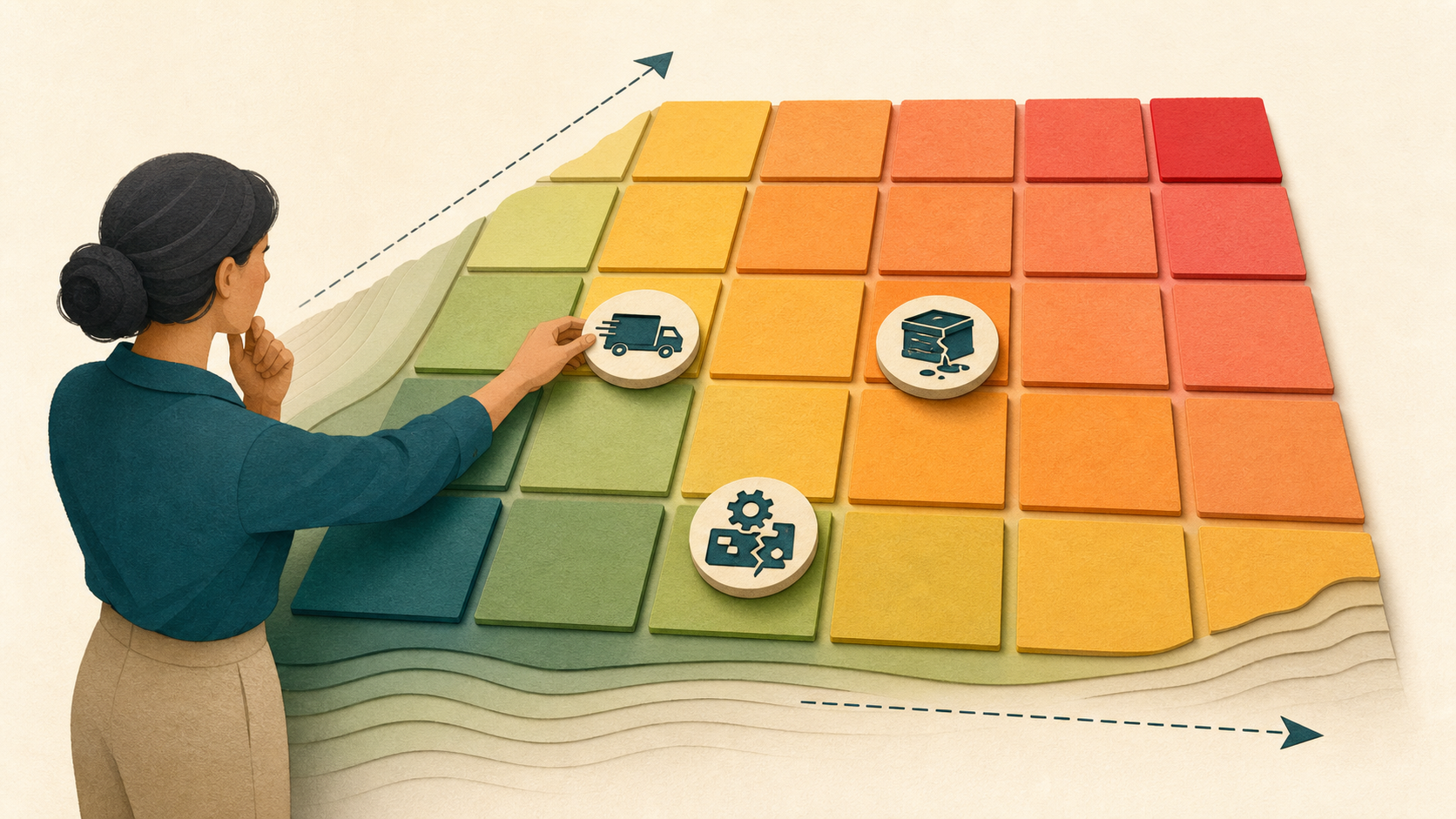
Every risk can be placed on two dimensions: how likely is it, and how damaging would it be if it happened?
Low likelihood, low impact. Watch periodically; no urgent action needed.
High likelihood, low impact. Build a routine process.
Vol 02Low likelihood, high impact. Transfer via insurance or build backup plans.
Vol 09High likelihood, high impact. Fix this first, before anything else.
| Quadrant | Likelihood | Impact | What To Do |
|---|---|---|---|
| Monitor | Low | Low | Watch periodically; no urgent action needed |
| Manage | High | Low | Build a routine process, this is Volume 02's systems thinking at work |
| Insure or Prepare | Low | High | Transfer via insurance or build specific backup plans |
| Urgent Action | High | High | Fix this first, before anything else in this volume |
Likelihood asks "how often?" Impact asks "how bad?" A risk is only truly dangerous when both answers are high, but even a rare, high-impact risk deserves real preparation, precisely because "rare" doesn't mean "impossible."
Here's the full version of the private-worry story from the start of this chapter.
For years, MANIAC MINDZ's owner privately worried about a handful of "what if" scenarios, a fire, a key tailor leaving, a big customer never paying, without ever writing any of them down or deciding what to actually do about each one. The worry itself did nothing to prepare the business.
A single afternoon spent building a Risk Register, naming each fear, honestly rating its likelihood and impact, and assigning at least a first response, turned vague anxiety into a concrete, prioritized list. Several items turned out to be "Monitor" quadrant concerns not worth much attention; two were squarely "Urgent Action" and got fixed within the month.
| Business | A Risk Easy to Underestimate |
|---|---|
| City Kitchen | Relying on a single supplier for a key ingredient |
| Nimbus Labs | A single senior developer holding undocumented system knowledge |
| Green Fields Farm | A single bad season wiping out the year's entire income |
Unwritten worry doesn't prepare a business for anything, see the example story.
Without the likelihood/impact matrix, everything feels equally scary, and nothing gets prioritized correctly.
A risk's likelihood and impact shift as the business grows, review the register at least twice a year.
List every "what if" worry you privately hold about your business. For each, rate likelihood and impact honestly, place it on the matrix using the Risk Register Template, and note at least a first response idea.