Four stages, every time
Prevent, detect, respond, recover, applied to any risk on the register.
Volume 10, Chapter 6
This framework isn't a new idea, it's a name for the discipline this manual has been teaching since Volume 02, applied specifically to catastrophic risk.
Every risk still needs a full plan for when it happens anyway, not just a prevention habit.
Prevent, detect, respond, recover, applied to any risk on the register.
Lessons learned must feed back into prevention, not vanish.
A plan in one person's head doesn't survive their absence.
The same Six Questions discipline, aimed at catastrophic risk.
Imagine a key fabric supplier suddenly stops supplying, mid-order. A business that has only ever thought about "prevention" has nothing left to do but panic. A business with a full plan already knows the next move: contact the backup supplier immediately, check current stock against open orders, and once things settle, ask whether the primary relationship needs replacing entirely. Preventing a problem and knowing what to do when it happens anyway are two different kinds of preparation, and most plans only ever build the first one.
A risk response plan turns each entry on the Risk Register into a specific, four-stage plan: how to prevent it, how to detect it early, how to respond when it happens, and how to recover afterward, with lessons feeding back into prevention.
Chapters 1–5 mapped the threats. This closing chapter is the method for turning any one of them into a real plan, the same discipline as Volume 02's Six Questions, applied specifically to things going wrong.
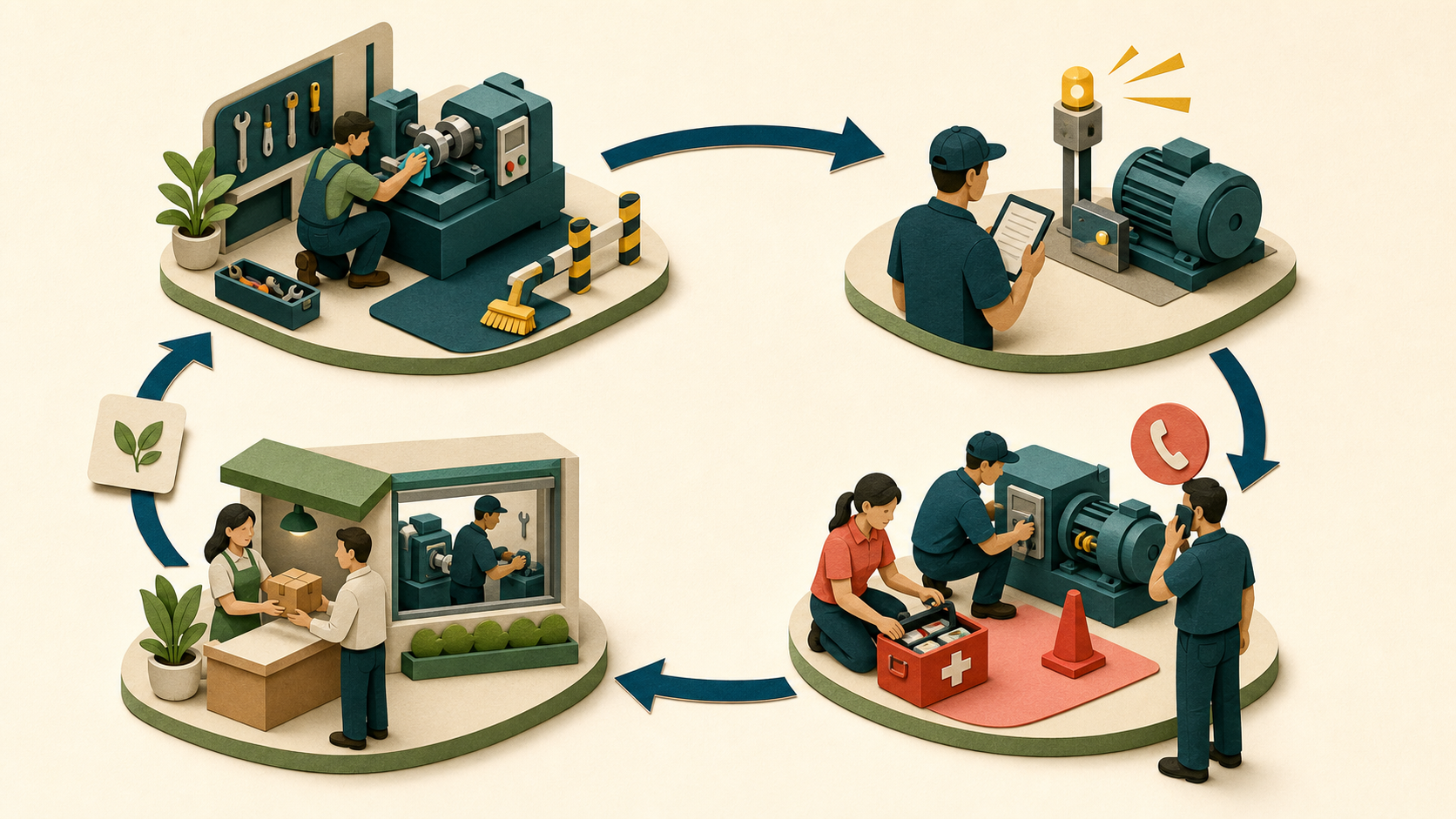
What reduces the likelihood? Example: clean workspaces, maintained equipment.
How would we notice it early? Example: smoke detectors, regular walk-throughs.
What do we do the moment it happens? Example: evacuation route, emergency contacts.
How do we get back to normal? Example: insurance claim, temporary workspace.
| Stage | Question | Example (Fire) |
|---|---|---|
| Prevent | What reduces the likelihood? | Clean workspaces, maintained equipment, no smoking near fabric |
| Detect | How would we notice it early? | Smoke detectors, regular walk-throughs |
| Respond | What do we do the moment it happens? | Evacuation route, extinguisher locations, emergency contacts |
| Recover | How do we get back to normal? | Insurance claim, temporary workspace, asset register for replacement |
After recovery, lessons learned feed back into prevention, exactly Volume 02's "what happens if it fails?" question, completing the loop rather than starting fresh each time.
Risk: A key supplier suddenly stops supplying fabric.
| Stage | Plan |
|---|---|
| Prevent | Maintain relationships with at least two suppliers per major fabric type (Volume 12: Procurement) |
| Detect | Track supplier delivery reliability over time (Volume 04, Chapter 7), a pattern of lateness is an early warning |
| Respond | Immediately contact the backup supplier; assess current stock against open orders |
| Recover | Rebuild stock levels; review whether the primary supplier relationship can continue |
| Lessons Learned | If this was the only supplier for a specific fabric, add a second one before the next order cycle |
This exact structure applies to every entry on the Risk Register: a founder's illness, a cyberattack, a currency shock. All of them follow the same four questions.
Recall Chapter 2's generator story and the farm's borrowed-pump agreement from Volume 02, Chapter 4. Both are, in retrospect, complete risk response plans built using this exact four-stage structure. They were arrived at independently, before this chapter ever named the method. That's the point: this framework isn't a new idea, it's a name for the discipline this manual has been teaching since Volume 02, applied specifically to catastrophic risk.
| Business | A Complete Response Plan Worth Building |
|---|---|
| Bright Path Academy | A plan for continuing lessons if the physical school must close suddenly |
| Rapid Auto Works | A plan for a customer's vehicle being damaged while in the shop's care |
| Green Fields Farm | A plan for a season with significantly below-average rainfall |
Prevention reduces likelihood but never reaches zero, every risk still needs a response plan for when prevention fails anyway.
Recovering from an incident without updating prevention repeats the same vulnerability, see Volume 23's Mistake Log.
A response plan that isn't written down is exactly the risk Volume 02 warns against. The plan must survive the absence of whoever designed it.
Pick your top three "Urgent Action" or "Insure or Prepare" risks from the Risk Register (built across Chapters 1–5). For each, write a complete four-stage plan using Section 3's worked example as a template.