Volume 13, Chapter 2
Stock Counts and Reorder Levels
Definition
Imagine a business reorders fabric "when it looks low," a habit that feels reasonable enough, until a popular colour runs out completely mid-order. The only fix left is an emergency purchase at above-market price, because nobody had ever actually calculated how long a new order takes to arrive. "Looks low" was never a number. It was a guess wearing a system's clothes.
A stock count is a physical verification of how much of something actually exists, compared against what the records say should exist. A reorder level is the stock quantity that triggers a new order, set high enough that a new delivery arrives before stock actually runs out.
Recall Volume 02, Chapter 4's fabric reordering system, "reorder when a fabric type drops below 5 rolls", that's a reorder level, in miniature. This chapter builds the full method behind that single example: how to count accurately, and how to set the trigger point correctly.
The Reorder Point, Explained
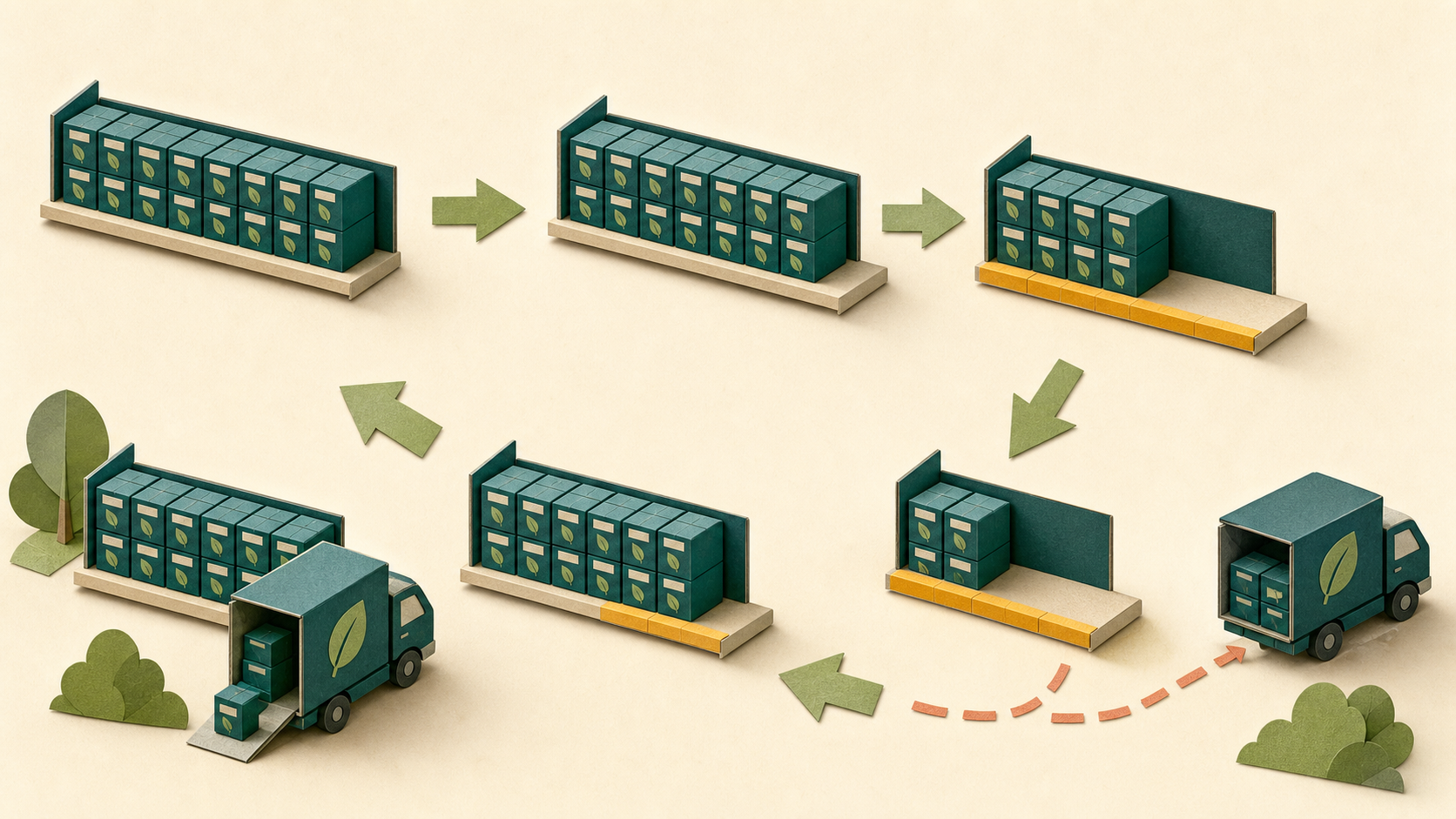
The reorder point isn't "zero", it must account for lead time, the delay between placing an order and it actually arriving:
Reorder Point = (Average Daily Use × Lead Time in Days) + Safety Buffer
Worked example: MANIAC MINDZ uses an average of 2 rolls of a specific fabric per day; the supplier's lead time is 5 days; a safety buffer of 3 rolls covers unexpected demand spikes.
Reorder Point = (2 × 5) + 3 = 13 rolls
Order when stock hits 13 rolls, not when it hits zero, the difference is exactly enough time for the new delivery to arrive before production runs dry.
The reorder point isn't "when we're out", it's "when we're about to be, accounting for how long a new order takes to arrive."
Counting Methods
| Method | How It Works | Best For |
|---|---|---|
| Full physical count | Count everything, on a set schedule (e.g., monthly) | Smaller inventories, or a full re-count against records |
| Cycle counting | Count a rotating portion regularly, covering everything over time | Larger inventories, spreads the effort |
| Spot checks | Unannounced counts of specific high-value or high-risk items | Deterring and catching Chapter 3's shrinkage (stock quietly lost to theft or error) |
Every count should be performed by someone other than whoever normally manages that stock day to day, the same segregation of duties principle from Volume 11, applied to inventory instead of cash.
Ready-to-use version: Stock Count Sheet Template
Example Story: The Reorder Level That Was Just a Guess
Here's the full version of the "looks low" story from the start of this chapter.
Before calculating it properly, MANIAC MINDZ's "reorder when it looks low" habit led to an emergency, above-market-price fabric purchase when a popular colour ran out mid-order, the lead time had simply been underestimated by feel. Calculating the actual reorder point using real average usage and the supplier's real lead time (Section 2's formula) turned "it looks low" into a specific number anyone could act on consistently, regardless of who was managing stock that week.
Across Industries
| Business | Their Reorder Trigger |
|---|---|
| Golden Crust Bakery | Flour reordered when stock drops below 3 days' average baking needs |
| Rapid Auto Works | Common spare parts reordered based on historical repair frequency |
| Green Fields Farm | Seed and fertilizer ordered well ahead of the planting season's known lead times |
Common Mistakes
A feeling, not a number, see the example story.
Triggers a reorder too late, exactly when stock is already critically low.
Removes the independent check, see Volume 11's segregation principle.
Quiz Yourself
Practice Exercise
Calculate the reorder point for your three most-used inventory items using Section 2's formula. Compare it to your current, possibly informal, reordering habit.
Quick Summary
Quick Summary
- A stock count verifies physical reality against records; a reorder level triggers a new order before stock runs out.
- Reorder Point = (Average Daily Use × Lead Time) + Safety Buffer, never just "zero" or "it looks low."
- Counts should be performed independently of whoever manages the stock daily.