Volume 12, Chapter 1
Approving Suppliers
Definition
Imagine a new fabric supplier offers a price noticeably below the usual range. It's tempting to place a big order right away and lock in the saving. A small trial order first reveals something the price never could: the fabric's quality is inconsistent from roll to roll. Buying in bulk without that trial would have meant discovering the problem mid-production, on orders already promised to real customers. The lowest price and the safest choice are not always the same choice.
is the deliberate process of checking who a business buys from before the first order is placed, rather than discovering a supplier's reliability, quality, or honesty only after money has already changed hands.
Not every willing seller deserves to become a supplier. A short, consistent approval process, checking price, quality, reliability, and reputation, turns "we've always used them" into a deliberate decision, and gives the business a documented reason to switch when a supplier stops performing.
The Procurement Cycle
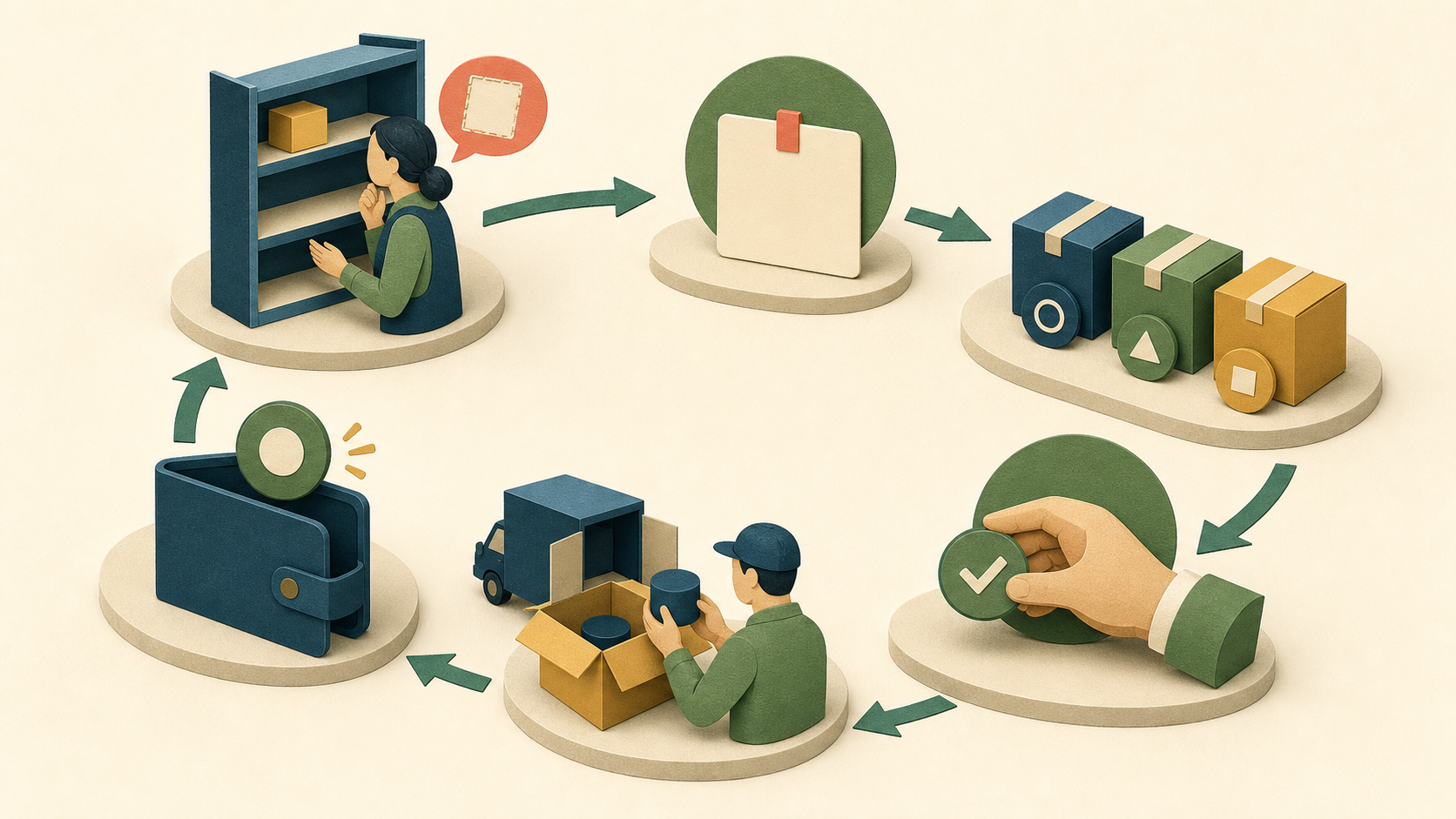
This chapter covers the first stage of procurement (the business's whole buying process); the rest of the volume follows the cycle through to its end. Notice the note at the bottom of the diagram, placing the order, receiving goods, and paying for them should be held by different people, exactly Volume 11, Chapter 2's purchase triangle.
The Four Approval Criteria
| Criterion | What to Check |
|---|---|
| Price | Competitive, but not suspiciously low (Chapter 2) |
| Quality | A sample or trial order, checked against the business's own standard (Volume 14: Quality Control) |
| Reliability | Can they deliver on time, consistently? Ask for references from other customers |
| Reputation | Business registration, years operating, how they handle problems when things go wrong |
Once approved, the supplier's details join the supplier records built in Volume 04: pricing, lead time, delivery and quality history, tracked over every order, not just the first one.
Approve suppliers on purpose, not out of habit. "We've always used them" is a habit, not an approval.
Example Story: The Cheaper Fabric That Cost More
Here's the full version of the cheap-fabric story from the start of this chapter.
A new fabric supplier offered MANIAC MINDZ a price notably below the usual range. It was tempting, but the supplier had not yet been approved through the standard process. A trial order revealed the fabric's actual quality was inconsistent between rolls, something the low price alone never would have shown. Buying in bulk without that trial would have meant discovering the problem mid-production, on customer orders already promised. That is exactly the kind of quality failure Volume 14 exists to catch, ideally before it ever reaches a customer.
Across Industries
| Business | A Supplier Approval Consideration |
|---|---|
| Golden Crust Bakery | Consistency of flour quality between deliveries, not just price per bag |
| Rapid Auto Works | Genuine vs counterfeit parts, reputation matters more than price here |
| Green Fields Farm | A fertilizer supplier's reliability during peak planting season specifically |
Common Mistakes
As the fabric story shows, the cheapest quote can hide a quality or reliability problem that costs far more later.
A small trial order is inexpensive insurance against a large, disappointing one.
Approval isn't permanent, a supplier's quality or reliability can drift; review periodically using the same four criteria.
Quiz Yourself
Practice Exercise
List your current suppliers. For each, confirm whether they were ever formally approved against the four criteria, or simply "always used." Run at least one through the process properly this month.
Quick Summary
Quick Summary
- Supplier approval checks price, quality, reliability, and reputation, deliberately, before the first real order.
- A trial order is cheap insurance against discovering a problem in a large one.
- Approval isn't permanent, review suppliers periodically, not just once.